Mold Questions Homeowners Ask Most
Request an estimate today
What people ask us
How do I stop mold from coming back in my basement?
Say you have a full basement with stone or block walls. Moisture is the real target. Keep indoor humidity under about 50 percent, run a dehumidifier, and fix gutters so water flows away from the foundation. Seal small leaks early. If mold keeps returning, a local provider can look for the hidden water source.
Is it safe to clean mold myself?
Safe DIY, smart pro. Say you spot a small patch, under about ten square feet, on a hard surface like a tile. You can wipe it with detergent and water while wearing gloves, a mask and eye protection. Do not scrub large areas, soft materials or anything that smells strong. Those jobs call for a provider with proper containment.
Is black mold more dangerous than other mold?
Dark mold looks scary, but color alone does not tell you the risk. Any mold can bother people with allergies, asthma or weak immune systems. Treat all growth seriously. Do not disturb it, and keep family members away. A provider can test the air or surfaces and explain what you actually have.
Does homeowners insurance cover mold removal?
It depends on your policy and on what caused the mold. Some policies may cover mold that follows sudden damage, like a burst pipe. Slow leaks and neglect are often excluded. Check your policy and ask your insurer. Providers can often help document damage with photos and notes for a claim.
What happens during a mold inspection?
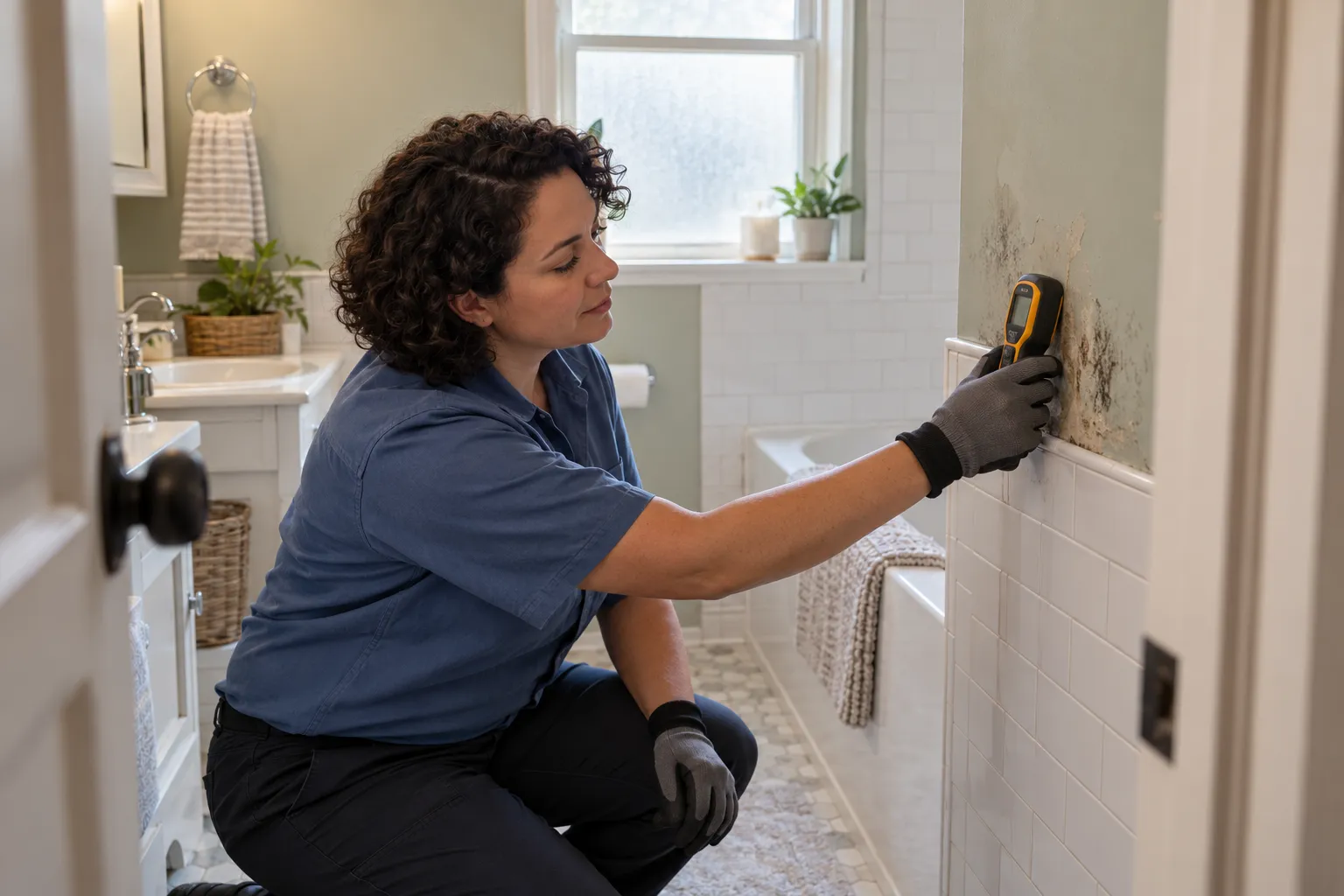
Say a provider arrives at your door. They talk with you about what you have seen, then check walls, ceilings, crawl spaces and basements. They may use a moisture meter or a thermal camera. If needed, they take samples for lab testing. Afterward, you get a plain explanation of what they found and what to do next.
How much does mold remediation usually cost?
Typical U.S. prices range widely. Small jobs can run a few hundred dollars, while larger or hidden problems can reach several thousand. Size, material, access and the water source all matter. Ask each provider for a written quote that lists the scope of work, so you can compare fairly.
Should I test before I remove mold?
Not always. If you can plainly see mold, testing may add little. Testing helps when you smell mustiness but see nothing, or when you want proof after the work. Ask the provider what makes sense for your home.
Will fixing mold help protect my home's value?
Protect the house. Say you plan to sell in a few years. Buyers and inspectors look for stains, odors and past moisture. A job done right, with the leak fixed and the work written down, gives you records to share. Hiding the problem or skipping repairs can cause bigger trouble later, including delays at closing.
Get in touch
Tell us about the damp spot, the smell or the stain. Send a request and a local provider can follow up with a written quote. There is no obligation.
No obligation